
Solar PV System Configurations and Circuit Requirements
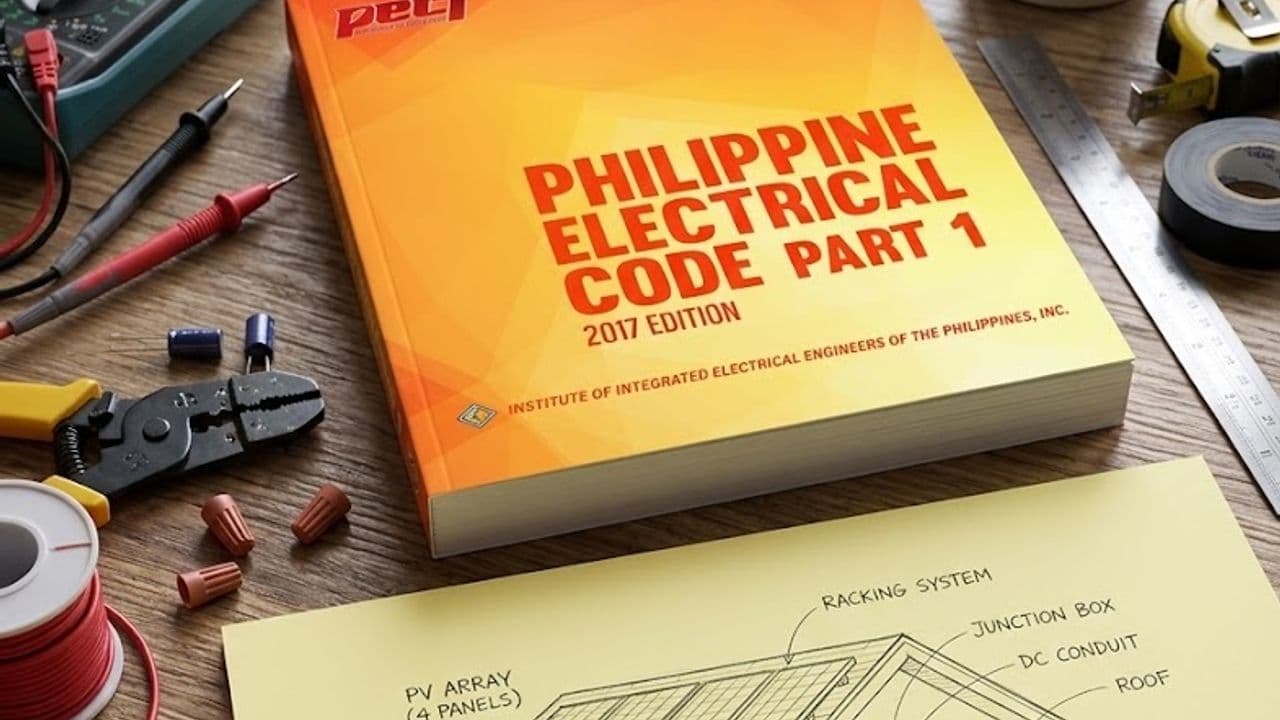
As stated in article 6.90 of the Philippine Electrical Code (PEC), the chapter that governs how PV system connects to the grid, to the maximum voltage DC circuits can carry. Including the five common PV system configurations, general equipment requirements, and the circuit voltage rules every solar professional needs to understand.
Published June 16, 2026 by J
The Five PV System Configurations Under PEC Article 6.90
Figure 6.90.1.1(B) of the PEC identifies the most common photovoltaic system configurations used in practice. Understanding which configuration applies to your project determines which rules govern your installation.
1. Interactive System
A basic grid-tied setup. The PV power source feeds through an interactive inverter, which connects to the electric production and distribution network via an inverter output circuit and a PV system disconnect.
2. AC Module System
Here, the inverter is built into each module — the array is composed of AC modules, and the inverter output circuit connects directly to the distribution network. PV source circuits, conductors, and inverters are treated as internal wiring of the AC module (per Section 6.90.1.6), and Article 6.90's PV source circuit rules do not apply to them.
3. DC Coupled Multimode System
This configuration supports both grid-tied and stand-alone loads. A multimode inverter connects the PV power source, an energy storage system, DC loads, and the distribution network — giving you flexibility for areas with unreliable grid access.
4. AC Coupled Multimode System
Similar to DC coupled but with the addition of an interactive inverter working alongside the multimode inverter. Energy storage is managed on the AC side, making this common in more complex hybrid installations.
5. Stand-Alone System
A PV system that supplies power independently of any electrical production and distribution network. The PV power source connects through a stand-alone inverter, with DC loads and an energy storage system all operating off-grid. This is the configuration of choice for remote sites and areas without grid access across the Philippines.
Note from the PEC: These diagrams are intended as identification tools for PV system components, circuits, and connections. Not all disconnecting means, grounding, and equipment grounding are shown.
PEC Section 6.90.1.4: General Requirements
PV Systems Can Supplement Existing Supply
Under Section 6.90.1.4(A), a PV system is permitted to supply a building or structure in addition to any other electrical supply system already serving it. Solar doesn't have to replace your existing connection — it can work alongside it.
Equipment Must Be Listed or Field Labeled
All of the following components must be listed or field labeled for PV application:
- Inverters and motor generators
- PV modules and panels
- AC modules
- DC combiners
- DC-to-DC converters
- Charge controllers
Using unlisted components is a code violation and a real safety risk.
Only Qualified Persons May Install
Section 6.90.1.4(C) is clear: all equipment, wiring, and interconnections must be installed only by qualified persons, as defined in Article 1.1 of the PEC. This isn't just regulatory language , it's the foundation of every safe, warranty-valid installation.
Multiple PV Systems Are Permitted
Two or more PV systems can be installed on a single building or structure. When systems are remotely located from each other, a directory compliant with Section 7.5.1.10 must be posted at each PV system disconnecting means.
No PV Equipment in Bathrooms
Section 6.90.1.4(E) prohibits PV system equipment and disconnecting means from being installed in bathrooms.
PEC Section 6.90.2.1: Maximum DC Voltage Rules
This is one of the most technically critical sections for system designers.
Voltage Limits by Structure Type
Installation Type Maximum DC Voltage
One- and two-family dwellings
600V or less
Other building types
1,000V or less
Non-building-mounted listed DC PV equipment
1,500V or less
How to Calculate Maximum Voltage for PV Source and Output Circuits
The PEC provides three accepted methods:
Method 1 — Module Listing Instructions
Sum the open-circuit voltages of series-connected modules, corrected for the lowest expected ambient temperature using the temperature coefficients stated in the module's listing or labeling.
Method 2 — Correction Factor Table for Crystalline and Multicrystalline Silicon Modules
Use Table 6.90.2.1(A) to apply the appropriate correction factor based on the lowest expected ambient temperature. For example, at temperatures between 14°C and 10°C, multiply the rated open-circuit voltage by 1.06.
For the Philippines, where ambient temperatures rarely drop below 15°C even at night, most installations will apply correction factors at the lower end of this table, but this must still be calculated and documented.
Method 3 — Licensed Engineer Design for 100 kW+ Systems
For PV systems with a generating capacity of 100 kW or greater, a documented and stamped system design from a licensed professional electrical engineer is accepted in lieu of the above calculations.
DC-to-DC Converter Circuits
- Single converter: Maximum voltage equals the maximum rated output of that converter.
- Two or more series-connected converters: Maximum voltage is the sum of each converter's maximum rated output — unless the listing instructions state otherwise.
Article 6.90 dictates every compliant solar installation in the country governing how systems are configured, what equipment is acceptable, who may do the work, and how voltage limits are calculated to protect both equipment and people.
At Solar Scout, we help homeowners navigate the Philippine Electrical Code with confidence so installations are done right, approved fast, and built to perform for decades.
Reference:
Philippine Electrical Code
Stay updated on PH solar
Get new guides, updated cost data, and free tool alerts - straight to your inbox.
Already ready to compare installers?
We use the details you submit only to follow up with installer options. See our Privacy Policy.